Marilyn's Haunting Chat with Jacqueline Kennedy
I am constantly amazed at the way anecdotes pertaining to the life of Marilyn Monroe are manipulated, even forged by the sensationalist authors that are inappropriately labeled her biographers. The narratives forged by many of those writers are not only pathographies; most of them are nothing but fictitious extrusions, novels. As early as 1964, a mere two years after her tragic suicide, the far right wing zealot, Frank Capell, wrote and published a thin pamphlet, The Strange Death of Marilyn Monroe. Capell’s publication, a political diatribe designed to pollute Robert Kennedy’s reputation and impede the former attorney general’s then political aspirations, can easily fit into each category: the pamphlet was both a pathography and a novel starring MM and RFK. The Strange Death of Marilyn Monroe also began what Donald Spoto correctly designated an avalanche of slapdash, dishonest memoirs in which Marilyn was the sexual door prize; but arguably of more significance is this: Frank Capell’s philippic, used by Norman Mailer and the corrupt, dishonest Robert F. Slatzer, ushered in decades of Marilyn Monroe literature which cast her in the mediocre role of a dimwitted cutout, a cardboard pawn that was being used in a political chess game that she was incapable of understanding. Moreover, along with the assassinations of the middle Kennedy brothers, and the passing of time, John and Robert Kennedy’s biographers, along with Marilyn’s biographers, a descriptive term that I employee with a certain dubiety, used their literary pulpits as a means to smear and discolor, essentially condemn all three. Why is that? I have searched for years, but I have yet to discover a satisfactory explanation for all the rancor and animus.
I have already written an article about the most recent publication starring Marilyn Monroe, a book declared by its authors to be a product of their imaginations, declared to be a fictional true crime thriller. Please, at the author’s request, ignore the apparent contradiction. Written by James Patterson with Imogen Edwards-Jones, The Last Days of Marilyn Monroe appeared late last year; and in Chapter 58, the authors presented the following anecdote:
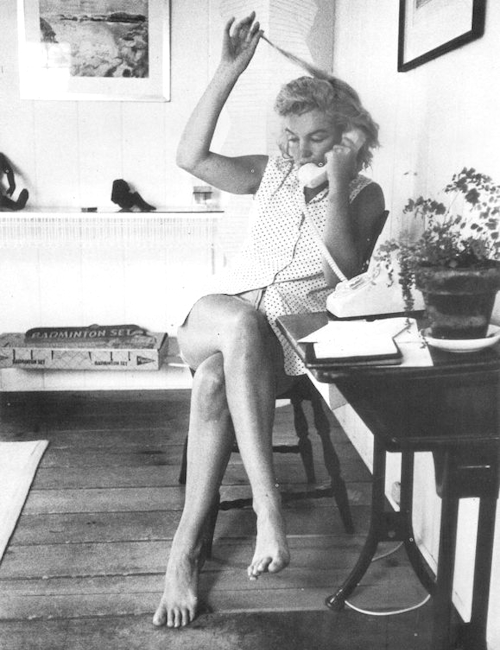
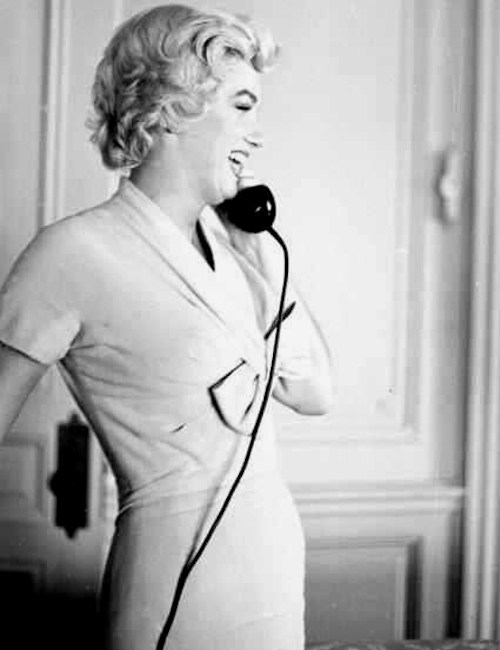
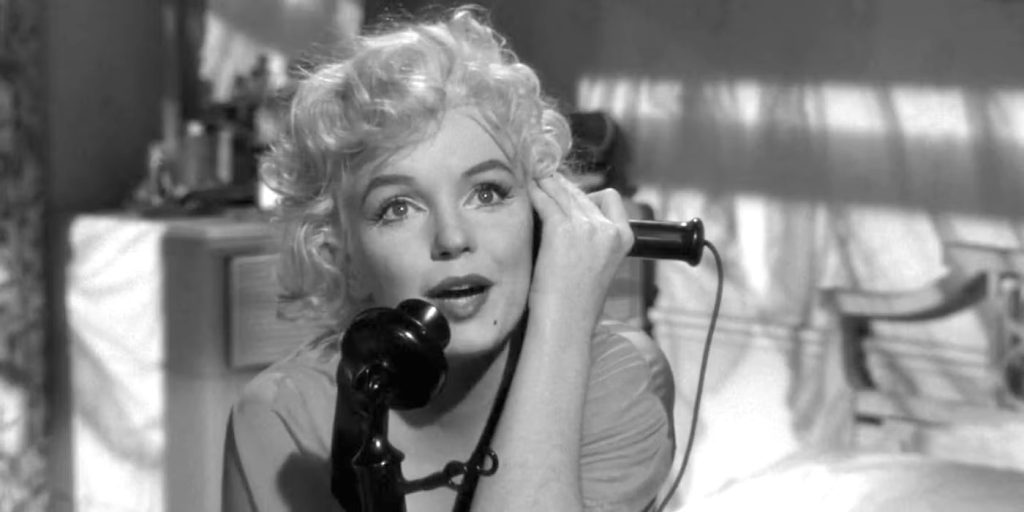
In April [of 1962], Marilyn places a call to the Kennedy Compound at Hyannis Port, Massachusetts. When she reaches First Lady Jackie Kennedy, she doesn’t identify herself but says only that she’s “looking for Jack.”
Alone in her bedroom, Jackie recognizes the voice of the woman who’s looking to take her place. Jackie has heard that Marilyn’s a bit troubled, so she keeps it light.
“Marilyn, you’ll marry Jack, that’s great,” she says, “And you’ll move into the White House, and you’ll assume the responsibilities of the First Lady. And I’ll move out, and you’ll have all the problems” (Patterson 334: emphasis mine, to be explained later).
The preceding three unusually brief paragraphs, and the italicized quotations, are remarkable, considering the absence of any verifiable proof or evidence that this purported telephone conversation between the reigning Queen of Hollywood and the reigning First Lady of the United States ever transpired; but then, disregarding the requirement for providing verifiable proof or evidence is the disencumbering bonus of purposely writing a biography that is a fiction, a product of the author’s imagination.
Since the narrators of Marilyn’s last days did not offer any evidence that substantiated their telephone anecdote and they did not provide a source—our literary narrators could not have interviewed the conversation’s participants—should we, the readers, accept the verity of their anecdote on faith; or should we relegate what they asserted to the category of a fiction, a created yarn included among the other created yarns based solely on its sensationalistic appeal? What could be more sensational than a telephone conversation between Marilyn Monroe and Jacqueline Kennedy during which the two women discussed a sexual dalliance between the former’s paramour and the latter’s husband, the Chief Executive of the United States? Well, in fact, the only conversation between those two iconic women offering more sensational electricity would be a conversation about an affair between the two women engaged in the conversation, the world’s most famous blonde and the brunette occupant of 1600 Pennsylvania Avenue, Washington, DC. Someday, I wager, that very assertion will appear.
Even so, absent any evidence of it, absent a source for it and absent any interviews with the participants engaged in it, from where did the telephone chat derive?
In her 2004 Marilyn publication, author Sarah Churchwell offered the following astute observation about her subject: If nothing else, the many lives of Marilyn Monroe show that belief precedes “the facts” (Churchwell KE:2). The many lives to which Sarah referred are the many and invariably disparate accounts, the written descriptions of the many lives lived by the movie star—that is, the many lives she lived as magically unspooled in biographical literature. Sarah’s observation is an axiom that can be applied essentially to any aspect of Marilyn’s many lives; but the cultural historian’s paramount intimation is this: those who compose biographies are not always interested in the facts. Or, Like Othello turning a handkerchief into what he will call proof of an adultery in which he already believes, Sarah added, so too can biography build a framework upon evidence whose very flimsiness demonstrates the firmness of the opinions it already holds (Churchwell KE:2).
Ahhhh, yes … the opinions already held, formed without any facts, formed without any evidence, the foregone conclusions contained in the many words written about Marilyn Monroe’s many lived lives. That existential situation loudly begs for an answer to this question: which written about Marilyn Monroe life originally unveiled the telephone anecdote, the haunting telephone chat?
Beginning in 1964, with the publication of Frank Capell’s Robert-Kennedy-Hatchet-Job, already herein referenced above, over the ensuing twenty-five years, various publishing outfits, some well-known, some not so well-known, released thirty books, all of which featured Marilyn Monroe as their subject. Not all of those books were classified as biographies: some were picture books while some were simply anthologies of magazine articles which focused on Marilyn’s film career; some were trashy and apocryphal, indecently sexualized memoirs, like the awful one written by Eddie Friedman, AKA Ted Jordan, who competed with Robert Slatzer for the spotlight of claiming to be Marilyn’s best friend and lover.1Evidently Slatzer sued Jordan and obtained a court order restraining Jordan from being around Slatzer and even talking or answering question about Marilyn’s faux second hubbie.
Based on the documents that I have seen from the “William Randolph Fowler Collection,” that is, the archives of journalist Will Fowler, exactly what prompted the lawsuit, the threat of administering a bloody nose, or something worse, remains unclear.
In 1965, Edwin P. Hoyt published the blonde movie star’s first authentic biography, Marilyn: The Tragic Venus, a book lauded by a famous Marilyn Monroe historian, Sir Markus Shaw. In fact, Sir Markus asserted that Ed Hoyt’s biography was the only reliable biography ever written about the blonde actress. Other notable books among the thirty published, those declared to be biographies, included these, their publication years in parenthesis: Norma Jean: The Life of Marilyn Monroe, Fred Lawrence Guiles (1969); Marilyn: A Biography, Norman Mailer (1973); Marilyn Monroe, Joan Mellen (1974); Marilyn Monroe, Tom Hutchinson (1982); Marilyn Monroe, Janice Anderson (1983); Goddess: The Secret Lives of Marilyn Monroe, Anthony Summers (1985); Marilyn, Gloria Steinem (1986); Marilyn Monroe, Graham McCann (1988). Not one of the biographies enumerated in the preceding paragraph mentioned a telephone conversation between Jacqueline Kennedy and Marilyn Monroe, a fact that leads me directly to the year of 1989, Clemens Claude Oscar Heymann, known to the literary world as C. David Heymann, and his vulgar publication: A Woman Named Jackie: An Intimate Biography of Jacqueline Bouvier Kennedy Onassis, released by Lyle Stuart Incorporated on June the 1st in 1989. Even though the purported biography did not actually concern Marilyn, she was a prominent character in the intimate prevarication.
With the arrival of Chapter 22, beginning on page 364 of his Jackie Kennedy biography, a salacious and tiresome contrivance, Heymann wrote the following about Marilyn:
She was crazy about Jack, said Peter Lawford. She devised all sorts of madcap fantasies with herself in the starring role, She would have his children. She would take Jackie’s place as First Lady. The fact that he was President allowed her to attach a lot of symbolic meaning to the affair. It was only a lark for him, but she really fell for the guy, for what he represented. In her depressive and doped-out state, she began to fall in love with him—or she convinced herself she was in love, which is basically the same thing.
Besides telephoning Jack at the White House, she used to send him copies of her love poetry, most of it written early in her career. Then one day she told me she had telephoned Jackie at the White House. For all her romanticism and masochism, Marilyn could also be a mean little bitch. Everybody wrote her up as being the poor helpless victim, but that wasn’t always the case.
According to Marilyn, Jackie wasn’t shaken by the call. Not outwardly. She agreed to step aside. She would divorce Jack and Marilyn could marry him, but she would have to move into the White House. If Marilyn wasn’t prepared to live openly in the White House, she might as well forget about it.
Actually Jackie was infuriated by the call, and for some reason, blamed Frank Sinatra for it. She couldn’t easily blame me because I was family, so she took it out on him (Heymann: AWNJ: 364-365).2In his publication about Robert Kennedy, Heymann repeated the preceding account virtually verbatim in Chapter 18, “Marilyn,” pages 305-306.
There are so many outrageous assertions and implications contained in the preceding two-hundred and fifty-two words that they stagger a fellow’s imagination, despite just how wild a fellow’s imagination might be. The entire premise is preposterous. Not even in a distorted but parallel universe would Marilyn Monroe telephone the wife of the sitting US president, admit to a love affair with him and then discuss a sort of peaceful transition of wifely power. Still, the preceding quotation was the first time that any author, dishonest or otherwise who contributed to a Marilyn Monroe orthodoxy, mentioned a telephone call and a conversation between the actress and First Lady.
Please note the curious absence of any direct quotations and Heymann’s attribution to Peter Lawford—said Peter Lawford, an implication that the English actor communicated the anecdote directly to Heymann, possibly during an interview, a topic to which I will return later, or at least a face to face conversation. That certainly was not the case, as will become crystal clear.
Clem Heymann never let the actual facts or what could be called the truth encumber his biographies. The author often expressed an odd pride or satisfaction with, a feeling of success that he derived from his writings, apocryphal writings that Norman Mailer would, without an apology, brand creative nonfiction or factoidal or faction, a combination of fact and fiction, or maybe simply an exciting form of Hunter Thompson’s gonzo journalism. Using literary techniques to create nonfiction biographies, techniques that are usually reserved for the creation of novels, is not acceptable. That type of journalism represents the type of condoned prevarication that has led directly to the type of audacious, even insolent and dishonest journalism prevalent in our contemporary world. I am not alone in my denunciation of those journalistic proclivities; and I share my position regarding Clem Heymann with all of his detractors.
Using the remarkable investigations and research conducted by Donna Morel—with whom I have communicated many, many times—David Cay Johnston wrote an article for Newsweek in which the journalist criticized Clem Heymann’s fraudulent works and criticized the publishing behemoth CBS for printing them. When Johnston began to question CBS’s Simon and Schuster publishing division, a representative told Johnston that he did not want to hear what Newsweek had found about any of the books by Heymann CBS had published. Johnston then commented:
It’s too bad CBS didn’t want to hear more, because all the celebrity bios Heymann wrote for them and other publishers—dealing with JFK, Bobby Kennedy, Jackie Kennedy Onassis, Elizabeth Taylor and Marilyn Monroe—are riddled with errors and fabrications. An exhaustive cataloging of those mistakes would fill a book […].
Also, writing for Justia.com, a website that provides legal analysis and commentary, the attorney John Dean pegged C. David Heymann as a fraud and then noted that the fraud’s
[…] biographies of high profile people are filled with sensationalized falsehoods and flat-out lies. Newsweek’s account seeks to pound a few nails into his coffin, but try as it might, it can’t manage to drive a stake through the heart of his body of work. Rather, Heymann’s vicious and malicious gossip-mongering lives on; his big-money trash-for-cash scam from which he profited handsomely while alive is now providing residuals for his estate.
David Johnston and John Dean are not the only journalists who have objected to Clem Heymann’s dishonesty and fraudulence, objected to the various publishers that have printed and promoted his trash-for-cash scams. I have written many words regarding Heymann’s disgusting literary practices, some of which I have already repeated herein; but there is no reason to repeat the long litany of his literary sins. If you want to read the lengthy subsection dedicated to C. David Heymann, that is a part of this website, follow this direct link. I hope you will. Here’s the link: A Serial Fabulist, Marilyn and the Kennedys.
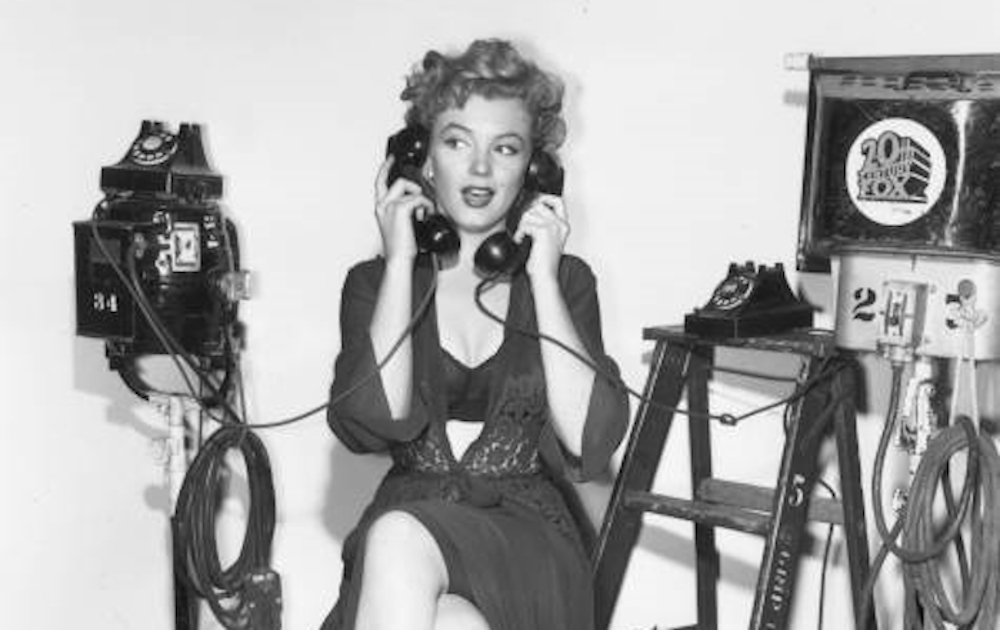
Heymann’s lies continue to distort and corrupt the historical record, and arguably that is the author’s most prodigious sin. For instance, in 1992, Mandarin Paperbacks, a London publishing house, released Marilyn: The Last Take, co-written by Peter Harry Brown, a biographer of the rich and the famous, and Patte A. Barham, Beverly Hills’ Society Columnist. The telephone anecdote appeared in Chapter 5 on page 75:
The telephone, which had always provided a connection between Monroe and the wider world, was now her link with her lover, John F. Kennedy.
“She told me she had a private number to Jack in the Oval Office,” said her friend, actress Terry Moore. “She was proud and that was a very, very exciting thing for her.”
This line also ran through to John and Jackie Kennedy’s private apartments after office hours. “Frequently, Jackie would answer the phone when Marilyn called the President,” remembered Patricia Seaton Lawford, Peter Lawford’s third wife. “And she was able to talk to Jack—in the presence of Jackie. This shows that Marilyn was more than just a casual sex partner” (Brown/Barham 75).
Marilyn Monroe, loved and adored by millions, even worshiped the world over, needed a telephone to connect her to the wider world. Amazing to the point of humor. Also, that Terry Moore was Marilyn’s friend and confidante has never been verified in any way;3I have only seen two photographs of Marilyn and Terry Moore together, one of which appears to be photo shopped. The other was snapped at the premiere of How to Marry a Millionaire and includes, along with Terry Moore, Robert Mitchum and Rock Hudson.and Patricia Seaton was Peter Lawford’s fourth wife, not his third. I have seen official telephone records and read reliable testimony which confirm that Marilyn called the Justice Department and spoke with Robert Kennedy; but I have never seen any official telephone records or read reliable testimony which confirm that she called the White House. Again, the authors did not offer one direct quotation from the alleged telephone conversations that occurred while Jacqueline allegedly listened to her husband talk to his paramour. Odd. I did not realize that the First Lady of the United States was a voyeur, but she must have been; then perhaps, she was just a masochist.
In 2013, twenty-four years after the publication of A Woman Named Jackie, Galley Books, a colophon of Simon & Schuster, Inc., published Christopher Andersen’s These Few Precious Days: The Final Year of Jack with Jackie. Andersen’s book memorialized the marriage and the relationship between the President and the First Lady. In Chapter 7, Andersen repeated Heymann’s telephone call anecdote, only Andersen unveiled several differences. He wrote:
Peter Lawford claimed that Marilyn called the White House and told Jackie of the affair and Jack’s alleged promises to her. “Marilyn, you’ll marry Jack, that’s great,” Jackie reportedly responded in that breathy voice that sounded not unlike Monroe’s. “And you’ll move into the White House and you’ll assume the responsibilities of first lady, and I’ll move out and you’ll have all the problems” (Andersen 182-183 emphasis mine).
Peter Lawford died on Christmas Eve morning in 1984, meaning that he died virtually three decades before Galley Books published Christopher Andersen’s literary effort. Thus, I am confident that I am correct when I assert that Andersen did not interview Peter Lawford; so that being the case, how did Andersen know exactly what Jackie said to Marilyn. Well, he could not have known, since Clem Heymann did not include a direct quotation in his account of the telephone chat between those rival females; so that being the case, following the footfall of C. David Heymann, did Andersen simply fabricate the dialogue credited to the First Lady? Evidently the answer to that question must be yes, the only viable answer, I must conclude, since Andersen did not offer any real evidence or proof that Peter Lawford actually overheard what must have been a tense conversation, a wife speaking to her husband’s lover, the one and only Marilyn Monroe. Andersen made a weak attempt to provide corroboration for what he alleged:
Jackie’s half brother Jamie Auchincloss had “no trouble” believing the confrontation between Marilyn and Jackie took place. “It sounds,” he concluded, “like the kind of gutsy thing my sister would say” (Andersen 183).
Therefore and so, the diaphanous belief of Jackie Kennedy’s half brother, and his equally diaphanous conclusion, based on what sounded like a normal and gutsy response from his half sister, functions as irrefutable proof in Christopher Andersen’s biographical world?! Speaking only for me, of course, I consider Jamie’s belief and what he thought his half sister could have said in such a bizarre situation, is not proof, is absolutely meaningless, and Mr. Andersen was painting red lips on that proverbial pig.
In 2014, two years after Clem Heymann’s unexpected death, Simon & Schuster, under the imprint of Emily Bestler Books, posthumously published Joe and Marilyn: Legends in Love. Heymann repeated his bizarre telephone call account, but with a significant difference. In Chapter 18, Heymann wrote:
Back in Los Angeles, Marilyn went to dinner with Ralph Roberts. “She gave me a detailed account of the birthday bash, but couldn’t seem to recall what happened after she and the president reached the Carlyle,” said Roberts. “However, I must admit I didn’t realize until thus particular point in time just how much John F. Kennedy had meant to her. She built the affair into a full-blown romantic fantasy. For months she’d been calling the president at the White House, writing him letters, even sending him snippets of her love poetry. But what truly amazed me was her admission that she’d once telephoned Jackie Kennedy. She actually told the First Lady she wanted to marry the president and apparently Jackie humored her by saying she had no objection and, in fact, had grown weary of her fishbowl existence in the executive mansion. I could well imagine their conversation, both women expressing their thoughts in that whispery, Little Bo Peep voice they shared. Still, I had some serious misgivings about Marilyn. She seemed to have constructed a whole new reality for herself, a magic kingdom in which she—and she alone—reigned supreme” (Heymann, J&M: 315).
I’m not going to spend much time or many words here on Clem Heymann’s reference to President Kennedy’s 1962 Birthday Gala at Madison Square Garden and his alleged assignation with Marilyn, at the Carlyle Hotel, following that event. That yarn, the mythology of that purported sexual interlude has been thoroughly disproven by the eye-witness testimony of a Marilyn fan, James Haspiel, and none other than Ralph Roberts, her good friend and personal masseur. Here’s the paramount issue: why did Clem Heymann transfigure his source for the telephone anecdote from Peter Lawford to Ralph Roberts. Why? The answer to that question can be found in Heymann’s propensity to employ deceased sources.
By the year of 1989, the year Heymann published A Woman Named Jackie, Peter Lawford had been dead for five years: deafening silence from Peter of course. Ralph Roberts was yet alive, and he would remain alive for another ten years. After Roberts’ death in 1999, Marilyn’s dear friend became an available source for Clem Heymann, a source that could neither question nor contradict his outlandish assertions about Marilyn Monroe—or so Clem must have thought. Also, Ralph Roberts, due to his close association with Marilyn, gave Heymann’s anecdote and his observations some needed gravity, some needed heft. In short, some needed believability.
In his goofy source notes, among the names that Heymann allegedly interviewed and whose testimony he allegedly used to construct Chapter 18 in Joe and Marilyn, Heymann listed both Peter Lawford and Ralph Roberts. Sadly, Lawford never had the opportunity to contradict what Heymann wrote about Marilyn and the middle Kennedy brothers; but Ralph precontradicted Heymann during an interview with Donald Spoto who, in 1993, published Marilyn Monroe: The Biography.
In the excerpt from Joe and Marilyn quoted above, Heymann created a Marilyn Monroe who had become obsessed with John Kennedy, had created a romantic fantasy with her, his future wife, at the center of the President’s life. Ridiculous. To begin with, during an interview with Donald Spoto, Susan Strasberg, Lee Strasberg’s daughter and Marilyn’s close sister-like friend, revealed the following:
Not in her worst nightmare would Marilyn have wanted to be with JFK on any permanent basis. It was okay for one night to sleep with a charismatic president—and she loved the secrecy and drama of it. But he certainly wasn’t the kind of man she wanted for life, and she was very clear to us about that (Spoto 683).
Additionally, during an interview with Ralph Roberts regarding Marilyn’s affair with President John Kennedy, Ralph revealed the following to Spoto:
Marilyn told me that this night in March [at Bing Crosby’s estate] was the only time of her “affair” with JFK. Of course, she was titillated beyond belief, because for a year he had been trying, through Lawford, to have an evening with her. A great many people thought, after that weekend, that there was more to it. But Marilyn gave me the impression that it was not a major event for either of them: it happened once, that weekend, and that was that (Spoto 487).
Interesting, is it not, the hearsay testimony presented by C. David Heymann juxtaposed against the hearsay testimony presented by Donald Spoto.
Donna Morel invested a considerable amount of time at Stony Brook University examining Heymann’s archives, his notes and taped recordings of interviews and so forth. It is worth noting here that the writer often contradicted himself regarding his interactions with Peter Lawford. Heymann said, on more than one occasion, that he tape recorded his interviews with Lawford; but then, he recanted that assertion, finally saying that he could not remember when or if he taped his Lawford interviews. Several journalists requested a tape playing session with Heymann, who invariably refused.
Also, regarding any notes taken during his interviews with Peter Lawford, Donna Morel discovered six handwritten pages that were allegedly taken during Lawford’s interviews. I have seen those six pages, and they most certainly were not created during an actual interview. The interviewer did not pose even one pertinent question to Lawford. Furthermore, Donna did not discover or uncover any evidence whatsoever that Heymann ever interviewed Ralph Roberts. It is a well-known fact that Ralph was very tight-lipped and usually would not speak to journalists about his friends, especially Marilyn Monroe. What Heymann reported that Ralph Roberts said about Marilyn would have been totally out of character for him, and I doubt very seriously if he ever had some serious misgivings about Marilyn; and if he did, I doubt very seriously if he would have expressed those misgivings. Keep in mind, of course, that Ralph joined eternity fifteen years before the publication of Joe and Marilyn: Legends in Love.
This article wanders around and meanders some, and I sincerely apologize. Obviously, the goal I set for myself was to determine the origin of the telephone chat anecdote. I submit that I accomplished my goal, even if by a circuitous route.
Clearly, the inveterate fantasist Clem Heymann, in 1989, originally created the telephone chat anecdote in A Woman Named Jackie. His source, Heymann asserted, was Peter Lawford. Then, twenty-five years later, in his 2014 posthumous publication, Joe and Marilyn: Legends in Love, Heymann wedged the story into an alleged interview with and into the mouth of none other than Ralph Roberts. I must reiterate, there is no concrete evidence, not anywhere, that Heymann ever interviewed either Ralph Roberts or Peter Lawford. Regarding the alleged interview with Lawford, to the point, Lawford’s young wife at the time, Patricia Seaton, contradicted Heymann and testified to David Cay Johnston that Heymann could not have interviewed her husband on any of the occasions he cited because he [Lawford] was under her care around the clock. Asked if Heymann could have somehow gotten past her, she said Lawford was close to death and hardly able to make coherent statements, much less conduct a lengthy interview.
Heymann’s often contradictory testimony, regarding not only his Lawford and Roberts interviews but many of his alleged interviews throughout his literary career—when and where each interview occurred, tape recorded or not tape recorded—create an oil tanker-sized doubt, leading me to this appropriate conclusion: the entire telephone call and chat anecdote involving Marilyn Monroe and Jacqueline Kennedy is a flimflam, a complete fiction created by C. David Heymann, who was clearly a pathological liar.
Admittedly, I was surprised to discover that Christopher Andersen hammered Heymann’s myth into an altogether different form; and Andersen’s publication was the real source of Patterson’s quotations, not Clem Heymann’s much maligned A Woman Named Jackie. In his goofy source notes, much like Heymann’s even goofier source notes, Andersen provided the names of persons that he allegedly had conversations with and the names of books and articles from which he obtained information. Anderson did not provide any dates on which these conversations with transpired. Further, having a conversation with a person is not the same as interviewing that person. Furthermore, Andersen did not specifically define what information he obtained and from which book or article he had obtained it, also like Clem Heymann. That tactic all but precludes the ability to verify any of Andersen’s assertions; and yet, in his bibliography, Christopher Andersen included C. David Heymann’s A Woman Named Jackie.
The quotations from Christopher Andersen and James Patterson are essentially identical with one major difference: the location where Marilyn’s purported telephone call landed. Andersen asserted that Marilyn called the White House, but Patterson asserted that Marilyn called the Kennedy Compound at Hyannis Port, Massachusetts. Why the difference? And why did Patterson repeat verbatim what Andersen had written and fail to acknowledge Andersen as the source? O well—I’ve heard that honor does not exist among highwaymen.
One final objection.
Heymann asserted through Peter Lawford that Marilyn could also be a mean little bitch; but nothing could have been further from the truth. I could offer several statements from persons who actually knew and associated with the world’s most famous blonde, statements that contradicted Heymann’s preposterous slander. Marilyn Monroe was empathetic, sympathetic, kind and generous. The actor Robert Mitchum even testified that Marilyn was generous to a fault. According to her friends and associates, she never said a mean, unkind word to anybody or about anybody, even those who she believed had been unkind to or had betrayed her. Thus, by extension, for Marilyn to have appeared before the press and complained about the behavior of or her mistreatment by the middle Kennedy brothers would have been totally out of character for her, would have never happened. That entire scenario is a lie. I do not understand why the industry of biography needs to perpetuate obvious lies and particularly the lie that Marilyn Monroe instigated and engaged in a haunting chat with Jacqueline Kennedy.